Starting a skincare brand is an exciting business opportunity, but turning an idea into a successful brand requires more than choosing a few products and designing attractive packaging. You need the right products, reliable skincare product manufacturers, suitable formulations, packaging, pricing and a clear plan for taking your brand to market.
The good news is that you do not necessarily need to set up your own factory to enter the skincare industry. By working with experienced cosmetic manufacturers in India, you can develop your product range and build your brand through private-label or third-party manufacturing.
Whether you are an aspiring entrepreneur, an existing business owner planning to enter the beauty industry, or an established brand looking to expand, this guide explains how to start a skincare brand in India step by step.
We’ll cover product selection, investment planning, manufacturing, minimum order quantities (MOQ), custom formulations, packaging and the important things to consider before launching. Digital marketing and brand positioning are equally important when planning how to start a skincare brand in India.
If you are wondering how to start a skincare brand in India, the first step is to understand how product development, manufacturing and branding work together. With the right manufacturing partner and a well-planned product range, you can turn your skincare business idea into a brand that is ready to reach customers.
Learning how to start a skincare brand in India begins with understanding the market, identifying your audience and choosing the right products.
Table of Contents
- Understand the Indian Skincare Market
- Choose Your Skincare Niche
- Decide Which Skincare Products to Launch
- Research Your Target Customers and Competitors
- How Much Does It Cost to Start a Skincare Brand in India?
- Find the Right Skincare Manufacturer in India
- Understand Private Label vs Third-Party Manufacturing
- Develop Your Skincare Formulations
- Choose Packaging and Build Your Brand Identity
- Understand Testing, Licensing and Regulatory Requirements
- How to Launch Your Skincare Brand in India Successfully
- Why Choose Royal Industries?
- Frequently Asked Questions
1. Understand the Indian Skincare Market
India has a diverse skincare market with customers looking for products across different price ranges, skin types and personal-care needs.
From everyday face washes and moisturizers to serums, sunscreens and specialised skincare products, there are several categories a new brand can explore.
For someone planning to start a skincare business, this creates opportunities to build a brand around a particular customer group or product category.
Some areas worth exploring include:
- Daily skincare and moisturising products.
- Face washes and cleansing products.
- Serums and targeted skincare.
- Sunscreens and sun protection.
- Body lotions and body care.
- Anti-ageing skincare.
- Products for oily, dry and combination skin.
- Men’s skincare and grooming.
You do not need to launch every category at once. A focused product range can help you understand your customers, manage your investment and build a recognisable brand.
If you are researching how to start a skincare brand in India, having a clear business plan can make your journey easier.
2. Choose Your Skincare Niche
Before approaching private label skincare manufacturers in India, decide what kind of skincare brand you want to create.
A niche gives your brand a clear direction and helps customers understand what makes your products relevant to them.
For example, you could build a brand around:
Everyday skincare
A range of essential products such as face wash, moisturizer, sunscreen and body lotion.
Premium skincare
A product range focused on carefully developed formulations, selected ingredients and premium packaging.
Active-based skincare
Products featuring ingredients such as niacinamide, hyaluronic acid, salicylic acid, vitamin C and other commonly used skincare actives.
Natural-inspired skincare
Products developed around selected botanical extracts and ingredient preferences, with suitable formulation and stability considerations.
Men’s skincare
A focused range of face washes, moisturizers, sunscreens and grooming products for men.
Our suggestion: Start with a niche you understand and a customer group you can reach. A clear brand concept makes product selection, pricing and marketing much easier.
When planning how to start a skincare brand in India, choose a niche that matches your target customers, budget and long-term business goals. A focused approach can help you build a recognisable brand and make your initial product selection easier.
One of the first steps in how to start a skincare brand in India is deciding which skincare category you want to enter.
3. Decide Which Skincare Products to Launch
Once you have selected your niche, shortlist the products you want to introduce.
Many new entrepreneurs make the mistake of planning a very large catalogue before understanding their budget, manufacturing requirements and target customers.
Instead, begin with a manageable product range.
An important part of learning how to start a skincare brand in India is finding a manufacturer who understands your product requirements. The right cosmetic manufacturers in India can support you with product development, manufacturing and other essential requirements as you prepare to launch your brand.
| Product | Purpose |
|---|---|
| Face Wash | Daily cleansing |
| Face Serum | Targeted skincare |
| Face Moisturizer | Hydration and moisturisation |
| Sunscreen | Sun protection |
| Body Lotion | Daily body moisturisation |
| Toner | Part of a skincare routine |
| Face Cream | Specific skincare positioning |
| Body Wash | Daily body cleansing |
You can also consider complementary products such as lip care, hand creams and specialised body-care products as your brand grows.
When finalising your first products, consider:
- Who will purchase them?
- What problem or need will the product address?
- What price range will your customers expect?
- Will the product be used daily or occasionally?
- Can you create a complete skincare routine around your range?
A well-planned collection of a few products is often a more practical starting point than launching too many products together.
Understanding customer preferences is essential when planning how to start a skincare brand in India successfully.
4. Research Your Target Customers and Competitors
A good skincare product needs a clear customer base.
Before spending money on manufacturing, understand who you want to sell to and what they expect from a skincare brand.
For example:
- College students may prefer affordable daily skincare.
- Working professionals may look for convenient skincare routines.
- Premium beauty customers may pay more for specialised formulations and packaging.
- Men entering skincare may prefer simple, easy-to-understand product ranges.
You should also study existing brands in your chosen category.
Look at their:
- Product range and positioning.
- Packaging and presentation.
- Selling prices.
- Product descriptions and ingredient communication.
- Customer reviews.
- Social media presence.
- Online and offline distribution.
The objective is not to copy another brand. It is to understand the market and identify how your products can offer a distinct proposition.
Choosing the right manufacturing partner is an important part of understanding how to start a skincare brand in India.
5. How Much Does It Cost to Start a Skincare Brand in India?
One of the most common questions entrepreneurs ask is: How much does it cost to start a skincare brand in India?
There is no fixed investment because the cost depends on your product selection, manufacturing quantity, formulation requirements, packaging and marketing plans.
If you are researching how to start a skincare brand in India with a limited budget, begin by calculating your expected manufacturing, packaging and marketing expenses. Understanding these costs early will help you select suitable products and plan your launch more effectively.
Here are the major expenses to consider:
| Investment area | What it covers |
|---|---|
| Product manufacturing | Manufacturing cost of your products |
| Formulation and R&D | Custom product development, where applicable |
| Packaging | Bottles, jars, tubes, pumps and other components |
| Branding and design | Logo, product labels and visual identity |
| Testing and compliance | Applicable testing and regulatory requirements |
| Marketing | Advertising, content creation and promotions |
| Logistics | Storage, transportation and distribution |
How can you manage your starting investment?
If you are launching your first skincare brand, consider these practical steps:
- Start with a focused product range.
- Select packaging according to your budget and brand positioning.
- Discuss MOQ with manufacturers before finalising your product list.
- Understand the complete product cost, not just the manufacturing cost.
- Keep a separate budget for marketing and distribution.
Remember that your total investment includes more than manufacturing. You should also plan for packaging, transportation, marketing, applicable taxes and other business expenses.
Budget planning is another important factor when understanding how to start a skincare brand in India.
6. Find the Right Skincare Manufacturer in India

From selecting formulations to finalising packaging, every decision matters when learning how to start a skincare brand in India.
Choosing the right manufacturing partner is one of the most important decisions when learning how to start a skincare brand in India.
You may have an excellent product idea, but you need a capable manufacturing partner to turn that idea into a finished product.
Working with established skincare manufacturers in India can give your business access to manufacturing infrastructure, technical expertise and product development capabilities without requiring you to build your own production facility.
Before selecting a manufacturer, consider the following:
Manufacturing capabilities
Check whether the manufacturer can produce the types of products you want to launch, such as face washes, creams, lotions, serums, sunscreens and body-care products.
Formulation support
If you want a unique product, ask whether the manufacturer can assist with custom formulation and product development.
Minimum Order Quantity (MOQ)
Understand the minimum manufacturing quantity for each product. MOQ can vary depending on the formulation, packaging components and production requirements.
Quality and documentation
Discuss applicable manufacturing licences, quality-control procedures, batch documentation and product testing.
A good understanding of product formulation, packaging and pricing can simplify how to start a skincare brand in India.
Packaging support
Ask whether the manufacturer can help coordinate suitable bottles, jars, tubes, pumps and other packaging requirements.
Communication and support
Choose a partner who understands your requirements and communicates clearly throughout product development and manufacturing.
A good manufacturing relationship should support your business not just during your first order, but as your brand expands.
7. Understand Private Label vs Third-Party Manufacturing
When researching private label skincare manufacturers in India, you will commonly come across two terms: private-label manufacturing and third-party manufacturing.
Both models allow you to launch your own skincare brand without setting up your own manufacturing facility. However, the scope of product development and customisation can differ.
| Private-label manufacturing | Third-party manufacturing |
|---|---|
| Often uses an existing manufacturer-developed formulation or product base | Can involve existing formulations or custom-developed products |
| Branding and product presentation are customised for your business | Manufacturing is carried out for your brand as agreed |
| Can be suitable for a quicker product launch | Can offer flexibility for specific product requirements |
| Product selection depends on the manufacturer’s catalogue | Product development can be tailored to the project |
Which option should you choose?
Private label may be suitable if:
- You want to launch a product range using available formulations.
- You want to focus on branding, sales and marketing.
- You prefer a relatively straightforward product development process.
Third-party manufacturing may be suitable if:
- You have specific formulation requirements.
- You want to develop a distinctive product range.
- You need a manufacturing partner for ongoing production.
The terminology can overlap between manufacturers, so always ask what is actually included in the service. Discuss formulation ownership, customisation, packaging, testing, documentation and MOQ before finalising an agreement.
Private labelling is one of the practical options to consider when exploring how to start a skincare brand in India.
Entrepreneurs exploring how to start a skincare brand in India should carefully evaluate their product development and manufacturing options.
8. Develop Your Skincare Formulations
What are the main phases and ingredients involved in formulating a lot.
Before deciding how to start a skincare brand in India, research the demand for different skincare products.
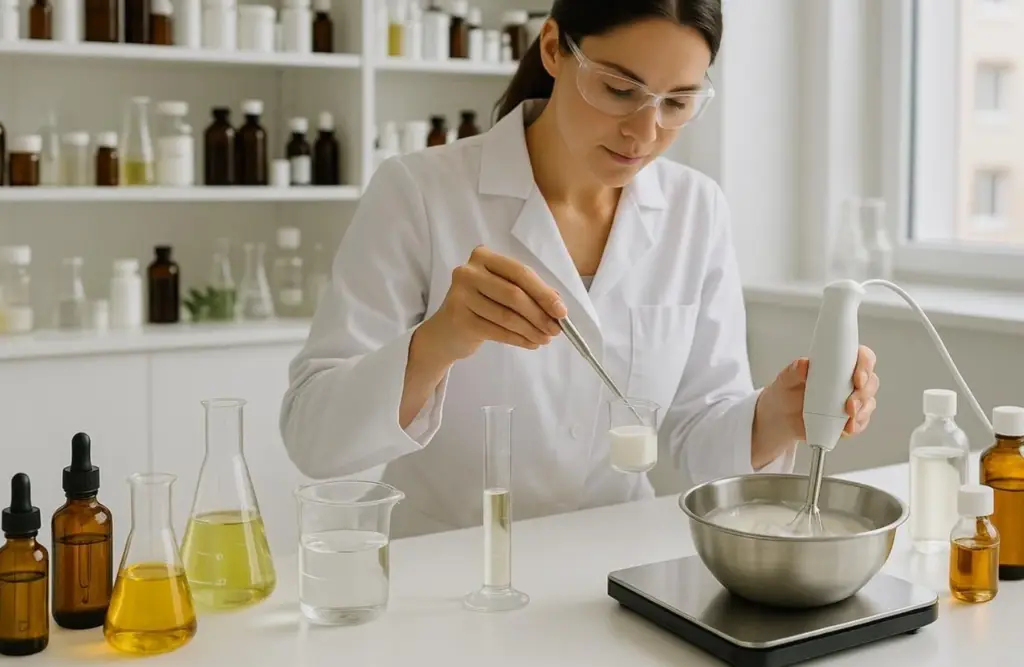
Your formulation plays an important role in your product’s texture, performance, appearance, stability and overall customer experience.
If you want to build a strong skincare brand, do not select products based only on popular ingredients or trending social media content.
Think about the complete product experience.
For example, if you are developing a face serum, consider:
- What is the intended purpose of the serum?
- Which active ingredients are appropriate?
- What concentration and formulation approach are suitable?
- How should the product feel when applied?
- Is the formulation compatible with the selected packaging?
- What testing is required before commercial production?
Custom formulation vs ready formulations
There are two common approaches to product development.
Ready formulations: You select from existing formulations offered by the manufacturer. This can simplify product development and may help reduce the time required to finalise a product.
Custom formulations: You work with the manufacturer’s formulation team to develop a product according to your requirements. This may involve ingredient selection, texture, fragrance, appearance and other product specifications.
Custom formulation generally requires more development and evaluation.
Why product samples matter
Before approving a formulation for production, review the sample carefully.
Check:
- Texture and spreadability.
- Fragrance and appearance.
- Absorption and after-feel.
- Packaging compatibility.
- Product performance against the agreed specifications.
A product that looks attractive on paper must also deliver a satisfactory experience in actual use.
Building a successful skincare business requires more than just knowing how to start a skincare brand in India; it requires consistency and a customer-focused approach.
9. Choose Packaging and Build Your Brand Identity
Private Label Beauty Products USA | Custom Skincare Manufacturing – Private label labs
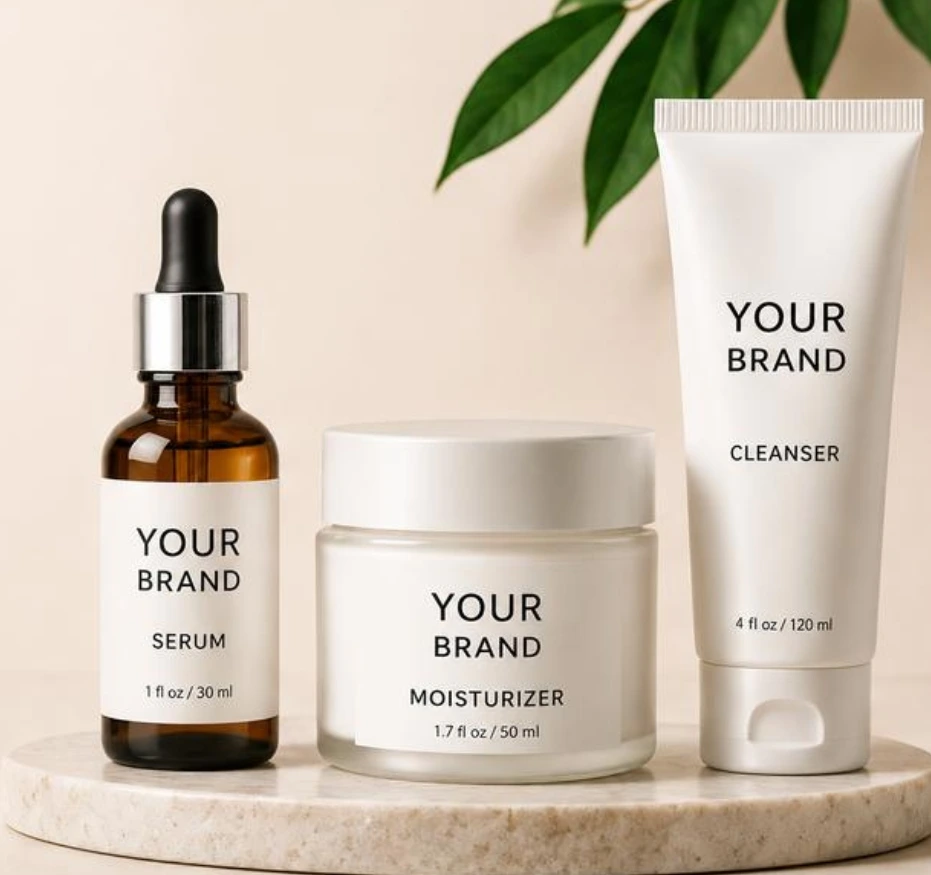
Packaging is one of the first things customers notice about a skincare product. It also affects product protection, usability, transportation and overall brand positioning.
Your packaging should match your target audience and product category.
Some common packaging options include:
- Airless pump bottles.
- Dropper bottles.
- Lotion pump bottles.
- Cosmetic jars.
- Squeeze tubes.
- Spray bottles.
- Flip-top bottles.
What should you consider when selecting packaging?
1. Product compatibility: The packaging material should be suitable for the formulation.
2. Customer convenience: Consider how easily customers can dispense, store and use the product.
3. Brand positioning: Premium, everyday and budget-friendly products may require different packaging approaches.
4. Practicality: Check availability, minimum order quantities, printing options and delivery timelines.
5. Label design: Make sure the design accommodates all applicable product and regulatory declarations.
Build a consistent brand identity
Your brand should have a recognisable visual identity across all products.
Work on:
- Brand name and logo.
- Colour palette and typography.
- Product names and descriptions.
- Packaging design.
- Website and social media presentation.
- Consistent product photography.
Good branding helps customers recognise your products and understand what your business stands for.
10. Understand Testing, Licensing and Regulatory Requirements
This is an important part of starting a skincare brand in India.
Before launching your products, understand the applicable cosmetic manufacturing, quality, labelling and packaging requirements.
In India, cosmetics are regulated under the Drugs and Cosmetics Act, 1940 and the Cosmetics Rules, 2020.
Cosmetic manufacturing licence
Cosmetic manufacturing for sale or distribution is regulated through the relevant State Licensing Authority.
Under the Cosmetics Rules, 2020, manufacturers apply for a manufacturing licence or loan licence using the prescribed process. The rules provide for manufacturing licences in Form COS-8 and loan licences in Form COS-9. CDSCO+2
If you are launching through a third-party manufacturer, discuss the manufacturer’s applicable licence and the responsibilities of both parties before production.
Product quality and testing
Depending on the product and its formulation, relevant evaluation may include:
- Physical and chemical quality checks.
- Microbiological testing.
- Stability studies.
- Preservative efficacy testing, where applicable.
- Packaging compatibility evaluation.
- Product-specific performance testing.
For example, a sunscreen requires appropriate SPF and other relevant product-performance evaluation before making such claims.
Testing requirements should be determined according to the product, applicable standards and intended claims.
Product labelling
Your product label is not just a branding element. It also carries important consumer and regulatory information.
Depending on the product and applicable rules, declarations may include:
- Product name and identity.
- Manufacturer details.
- Manufacturing licence details, where applicable.
- Batch number.
- Manufacturing and expiry/use-before information.
- Net quantity.
- Ingredient information.
- MRP inclusive of applicable taxes.
- Consumer care information.
- Directions and necessary warnings.
Cosmetics Rules, 2020 and the Legal Metrology (Packaged Commodities) Rules, 2011 are important references when preparing product labels. CDSCO+2
Important: Do not print your final packaging artwork without checking the applicable declarations and product-specific requirements. A qualified regulatory professional or the relevant licensing authority should review requirements for your particular product and business arrangement.
Also, make sure your product descriptions and advertising claims are truthful, substantiated and appropriate for a cosmetic product. Avoid presenting ordinary cosmetic products as treatments or cures for medical conditions.
11. How to Launch Your Skincare Brand in India Successfully
Once your products, formulations, packaging and documentation are finalised, you can move towards commercial manufacturing.
A typical product launch process looks like this:
Your skincare brand launch journey
- Finalise your product rangeConfirm the products, sizes, positioning and target selling prices.
- Approve formulations and samplesReview samples and confirm the agreed specifications.
- Finalise packaging and artworkSelect packaging and approve label designs and declarations.
- Confirm manufacturing requirementsAgree on quantities, pricing, timelines, responsibilities and documentation.
- Begin commercial productionManufacture the approved products with the required quality checks.
- Prepare for launchArrange product photography, website content, social media and distribution.
- Monitor customer feedback and scaleUnderstand customer preferences and plan future production accordingly.
Where can you sell your skincare products?
Once your products are ready, you can explore different sales channels:
- Your own e-commerce website.
- Online marketplaces.
- Instagram and other social media platforms.
- Beauty stores and retail outlets.
- Salons, spas and professional channels.
- Distributors and wholesalers.
You do not have to enter every channel immediately. Choose the ones that best match your customer base and available marketing budget.
Build your brand for long-term growth
A successful skincare brand is built through consistency.
Pay attention to customer feedback, product quality, packaging, customer service and repeat purchases.
As demand increases, you can expand your range, introduce new formulations and plan larger manufacturing quantities with your manufacturing partner.
Working with experienced cosmetic manufacturers can make the process of learning how to start a skincare brand in India much smoother.
12. Why Choose Royal Industries for Your Skincare Brand?
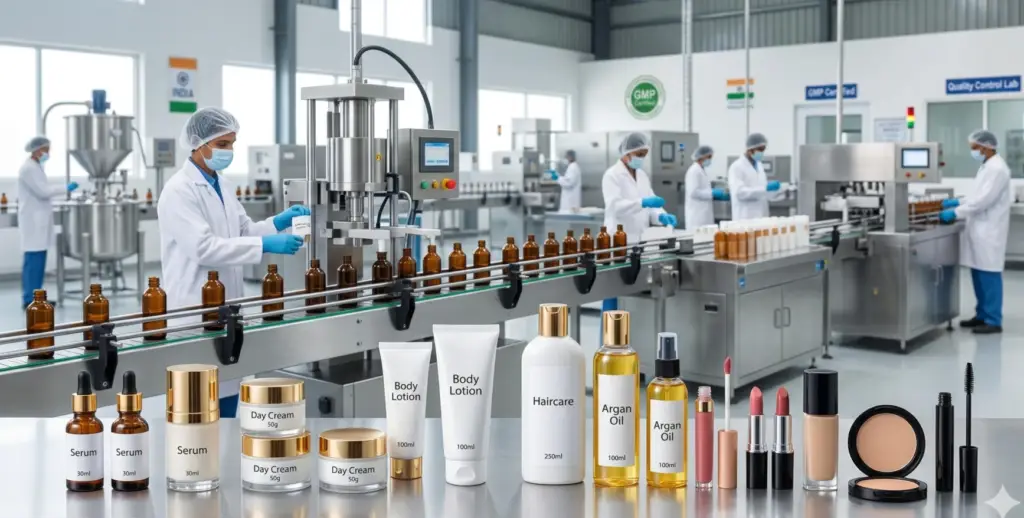
Turning a skincare idea into a market-ready product requires coordination between formulation, manufacturing, packaging, design and business planning.
At Royal Industries, we work with entrepreneurs, startups and established businesses looking to develop and manufacture their own skincare and personal-care products.
As third party cosmetic manufacturers in India, we aim to make the product development and manufacturing journey more convenient by bringing the important requirements together.
What can you work with us on?
1. Private-label and third-party manufacturing
Develop your own branded skincare products with manufacturing support suited to your requirements.
2. Custom formulations and product development
Work with our formulation team to discuss product concepts, ingredients, textures and specific formulation requirements.
3. Multiple product categories
Explore manufacturing possibilities across:
- Face washes and cleansers.
- Face creams and moisturizers.
- Serums and skincare products.
- Sunscreens.
- Body lotions and body washes.
- Haircare products.
- Men’s grooming products.
- Other personal-care categories.
4. Packaging and design coordination
Get assistance with product packaging requirements, label design and branding coordination.
5. Support throughout the process
From discussing your initial product idea to coordinating formulation, packaging and manufacturing requirements, our team can help you understand the next steps.
With the right strategy and manufacturing support, understanding how to start a skincare brand in India can be the beginning of a promising business journey.
Why work with Royal Industries?
- Manufacturing support for startups and established brands.
- Access to formulation and product development assistance.
- Multiple skincare and personal-care product categories.
- Private-label and third-party manufacturing options.
- Support with packaging and design coordination.
- A team that understands the requirements of building a cosmetic brand.
Whether you are planning to launch your first face wash or develop an entire skincare range, our objective is to help you move from an idea towards a market-ready product.
Knowing how to start a skincare brand in India is the first step. Building it successfully requires the right combination of product quality, reliable manufacturing, thoughtful branding and consistent marketing. With proper planning and the right support, your business can gradually grow into a recognised skincare brand.
Ready to Start Your Own Skincare Brand?
You do not need to figure out every manufacturing detail before starting a conversation.
Share your product ideas, preferred quantities, target market and packaging requirements with our team. We can discuss the available options and help you understand how to move forward.
Let’s Build Your Skincare Brand with Royal Industries
Get in touch with our team to discuss private-label and third-party skincare manufacturing.
Website: royalindustries.ltd
Phone: +91 93198 89984 / +91 93198 89983
Email: support@royalindustries.info
13. Frequently Asked Questions
1. How much does it cost to start a skincare brand in India?
The investment depends on the number of products, manufacturing quantities, formulations, packaging, testing, branding and marketing. There is no single fixed investment applicable to every skincare brand. Request a product-wise quotation before finalising your budget.
2. Can I start a skincare brand without owning a manufacturing unit?
Yes. You can work with a licensed third-party cosmetic manufacturer to manufacture products for your brand. This allows you to focus on product selection, branding, marketing and sales without establishing your own factory.
3. What is the minimum order quantity (MOQ) for skincare manufacturing?
MOQ varies between manufacturers and products. It depends on the formulation, packaging components, batch requirements and production process. Always confirm the MOQ for each product before finalising your range.
4. What is the difference between private-label and third-party skincare manufacturing?
Private-label manufacturing commonly involves selecting existing formulations and selling them under your brand. Third-party manufacturing can include both existing formulations and custom product development, depending on the manufacturer’s services and your agreement.
5. Can I develop my own skincare formulation?
Yes. You can discuss custom formulation requirements with a cosmetic manufacturer. Your formulation brief can include ingredients, product texture, fragrance, appearance, intended use and other specifications.
6. How long does it take to launch a skincare brand?
The timeline depends on product development, sample approvals, packaging availability, regulatory requirements and manufacturing schedules. Ready formulations may require fewer development steps than fully customised products. Ask your manufacturer for a project-specific timeline.
7. Which skincare products should I launch first?
Face washes, moisturizers, serums, sunscreens and body lotions are some options to explore. The best starting range depends on your target audience, brand positioning, budget and product concept.
8. Do I need a cosmetic manufacturing licence to sell my own skincare brand?
The manufacturing activity must be carried out under the applicable cosmetic manufacturing licence. If you use a third-party manufacturer, discuss the licensing arrangement and your responsibilities as the brand owner with the manufacturer and a qualified regulatory professional.
9. Can I sell my skincare products online in India?
Yes. You can explore your own website, online marketplaces and social media as sales channels. Ensure that applicable product, labelling, consumer protection and e-commerce requirements are followed.
10. Why should I choose an Indian skincare manufacturer?
Working with an Indian manufacturer can make it easier to coordinate product development, manufacturing, packaging and supply within the domestic market. Evaluate each manufacturer’s capabilities, quality systems, licences, MOQ and communication before making a decision.
Key Takeaways
- Starting a skincare brand begins with choosing the right niche and understanding your customers.
- A focused product range can make your initial launch easier to manage.
- Private label skincare manufacturers in India and third-party manufacturers can help you launch without setting up your own factory.
- Formulation, packaging, quality checks and regulatory requirements deserve attention before commercial production.
- Your manufacturing partner should support your business requirements as your brand grows.
- Careful planning, consistent product quality and effective marketing can help build a stronger skincare business.